At first glance, they have a lot in common. They are active go-getters who are able to make things happen around them. When you chat with them, you realize they’re grappling with the same doubts as most people dedicated to making a difference in their communities: uncertainty, fatigue, fears of failure, and the question of whether their efforts are worthwhile. The Stronger ChangeMakers program, a collaboration with Česká spořitelna bank and the Česká spořitelna Foundation, has been supporting community builders for several years now. We talked with Helena Masníková from the Via program team about what the program offers and why participants often become fast friends and long-term allies.
What do we mean by changemakers?
We mean people who care about what’s going on around them. Someone who organizes a neighborhood gathering, saves the local pub from closing down, sets up a community garden, runs a civic association, brings people together, or tries to get people to connect at school or through the local library. These people often would not describe themselves as leaders. It’s more that they see that something needs to be done, so they get on with it. And after a few years, they realize that it’s wonderful work, but also really draining.
What type of people usually apply to the program?
It’s quite interesting. Every year, we get two very different types of people. Some come because they’ve been going 100% for a long time. They’re building something, organizing, connecting people, resolving conflicts, raising funds. And they’re starting to feel that they can’t carry on like this for another ten years. Most aren’t burnt out (yet), but they are tired. Other people apply with a completely different motivation. They’ve got energy, drive and have had some initial successes in community building. But they want to take things further. They’re thinking about how to get more people involved. How to build a team. How to make a bigger impact. How to change not just one street, but perhaps an entire town or region. And, surprisingly, these two groups get on brilliantly in the program. And they complement each other.
So the program isn't about how to organize events or lead projects?
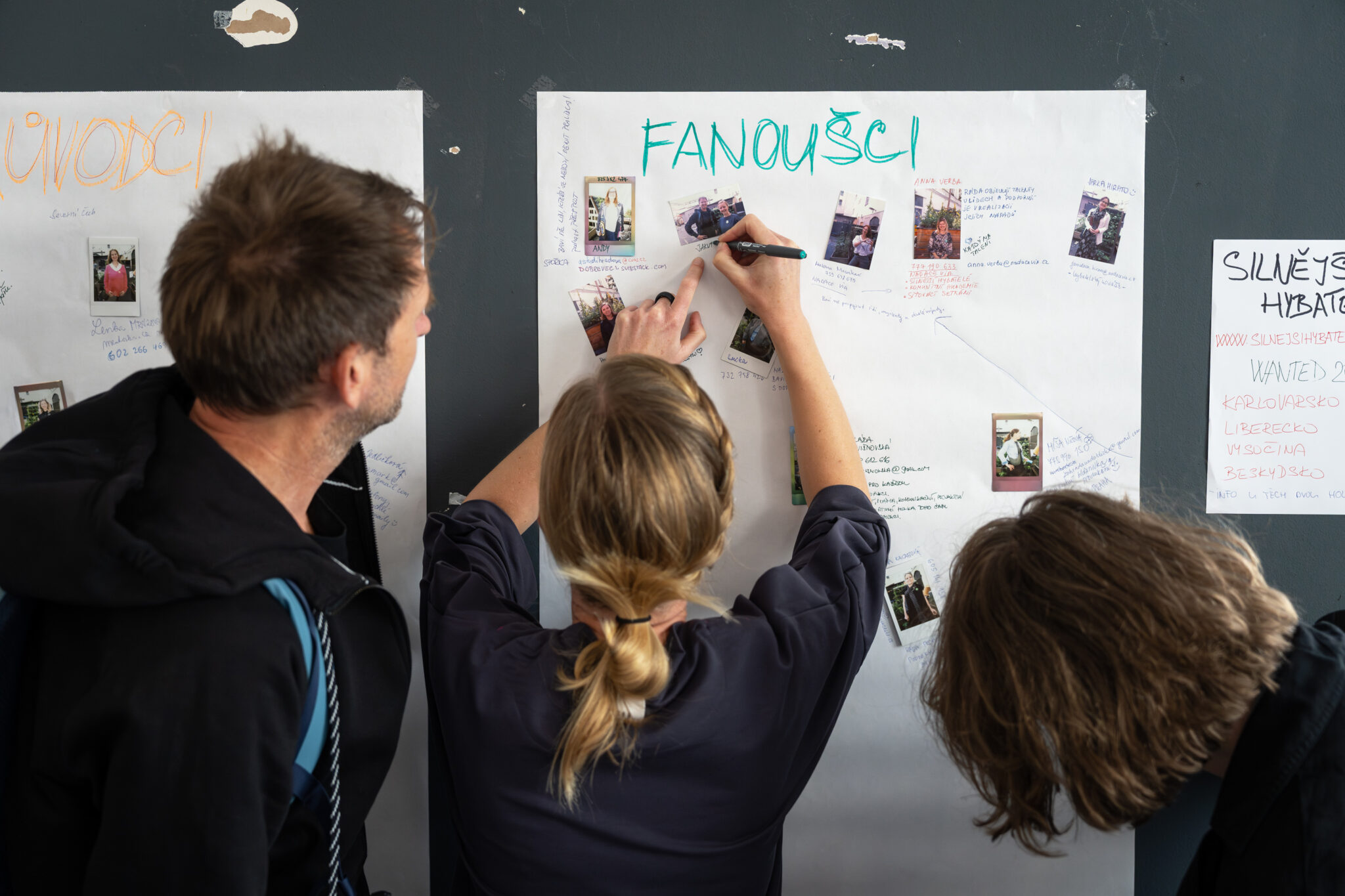
Not at all. Sure, we do talk about projects, communicating with other residents and getting people involved. But that’s not the main thing. The program is actually very much about the individuals themselves. About why they actually do what they do. What drains their energy and what recharges them. How to set boundaries or how not to have to do everything on their own. And how to find the courage to consider what they could achieve, to dream. We offer regional peer groups, mentoring, coaching and consultations with expert practitioners. Each participant puts together their own combination of support from these options.
Can you tell us about a particular case or individual who moved you?
Definitely. Martina from the Olomouc region comes to mind. When she joined the program, she’d already done a great deal of work for her region. But she still tended to underestimate herself. When something went well, she put it down to circumstances. When something went wrong, she blamed herself. Gradually, though, she began to realize that her work was having a real impact. That she wasn’t just someone helping out behind the scenes but that she was one of the driving forces behind the changes happening around her. She also began setting healthier boundaries between her voluntary and paid work and began to think about how to operate in a more long-term and sustainable way. And it didn’t stop at self-care. She began to articulate her vision much more clearly to other people. She wants to develop communities, restore landscape areas and support others around her. In my view, that’s precisely the moment when a person not only catches their breath, but also allows themselves to think on a larger scale.
What are the program participants usually most surprised by?
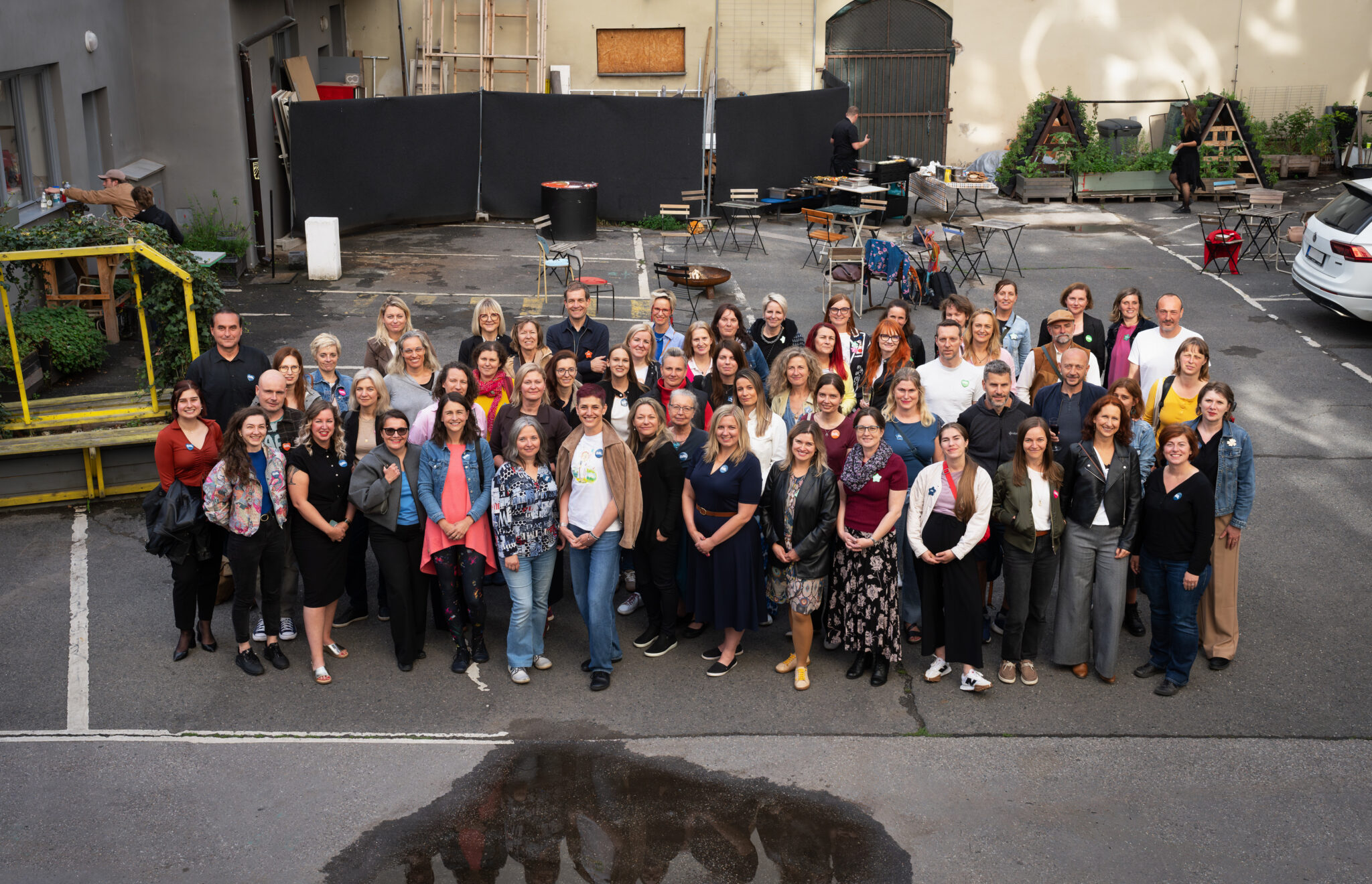
How much the peer group helps them. Many changemakers feel that the problems they’re tackling are theirs alone. That they’re the only ones who sometimes feel unsure about what they are doing, or that they’re the only ones who feel they can’t keep up or who sometimes wonder whether it’s all worth it. Then they turn up at the first program gathering and realize there are another 30 people sitting in the room who are dealing with similar issues. And suddenly they feel a sense of relief. One participant, for example, received some simple encouragement from her peers: “I hope you won’t be afraid to talk more openly about the project. It’s worth it.” It might sound like a small thing. But sometimes that’s exactly the sort of thing a person needs to hear.
What are participants' key take aways?
Everyone takes away something slightly different. Some feel more confident. Some gain new contacts. Some develop a specific plan for how to get other people involved. Some finally allow themselves to delegate. And some realize that they don’t have to be the one to do everything themselves, and that it’s OK to stop doing certain things. In my view, saying ‘no’ is an essential skill for a changemaker!
The program also includes mentoring. Every participant has the opportunity to receive up to 10 hours of individual support from an experienced mentor or coach. And they tackle all sorts of topics. Some people develop a strategy for their association. Some need to discuss a conflict within their team. Some are running for a seat on the local council. Some are dealing with their own self-doubt. What I love about it is that there isn’t just one right way. Everyone takes exactly what they need from the program.
Who do you think the program would definitely benefit?
For people who feel they could do something useful for those around them. Whether they’re leading an existing project or have only just achieved their first small steps in the community. For people who want to grow. And also for people who need to slow down for a while. It might sound like a contradiction, but the two go hand in hand. Because sometimes we take our biggest step forward precisely when we pause for a moment.
And what would you say to someone who’s thinking, ‘This probably isn’t for me’?
That most of the program participants felt exactly the same way at the start. Many of them didn’t see themselves as leaders or changemakers at all. They just cared about how the people around them were getting on. And that’s actually enough. Because Stronger ChangeMakers isn’t a program for superheroes. It’s for ordinary people who want to do good things and are looking for a way to do them in the long term, with greater impact and without burning themselves out in the process. This year, the Stronger ChangeMakers program is open to people from the Karlovy Vary Region, the Liberec Region, the Vysočina Region and the Beskydy region.