Since 2021, Via Foundation’s program On the Starting Line has supported small-scale community projects led by residents of socially excluded localities. The aim is to strengthen the capabilities and self-confidence of Roma community leaders and enable them to play an active role in community affairs. Micro-grants of up to EUR 800 (CZK 20,000) support implementation of community activities and serve as a low-threshold tool to promote grassroots participation. Via’s support also includes project guidance to grantees and opportunities to reflect on micro-grant impacts, in collaboration with the governmental Agency for Social Inclusion.
Experience from 2022-2024 shows that even small grants can have transformative potential when implemented in combination with community work. This article by Michal Kandler, participation expert and doctoral student, summarizes examples of good practice and shows why community micro-grants should be a standard component of public policy instruments for development and participation in socially excluded localities.
ENGAGEMENT IN SELF-HELP COMMUNITY ACTIVITIES IN 2022 AS A SPRINGBOARD FOR LOCAL COMMUNITY DEVELOPMENT
In 2022, Via Foundation supported 10 community projects through the On the Starting Line program. Despite an initial lack of trust in the early phases, these projects showed that local activities based on resident engagement can spark community development, when these activities lead to visible results, such as neighborhood festivals or improvements in public space.
According to Kandler, the first phase of community development rests on people with a shared experience coming together, and the need for a safe space in which they can listen to one antoher. Experience shows that even small projects can activate residents and strengthen their sense of belonging and self-confidence in their abilities.
Via-supported projects such as Plánkovička (Ostrava) and Jsme bROMov (“We are Broumov”, Broumov) demonstrate the benefits of using an asset-based approach to community development (ABCD) – in other words, starting with existing community resources. The active engagement of residents led to a transfer of responsibility, sharing of experiences and empowerment of community leaders in these projects.
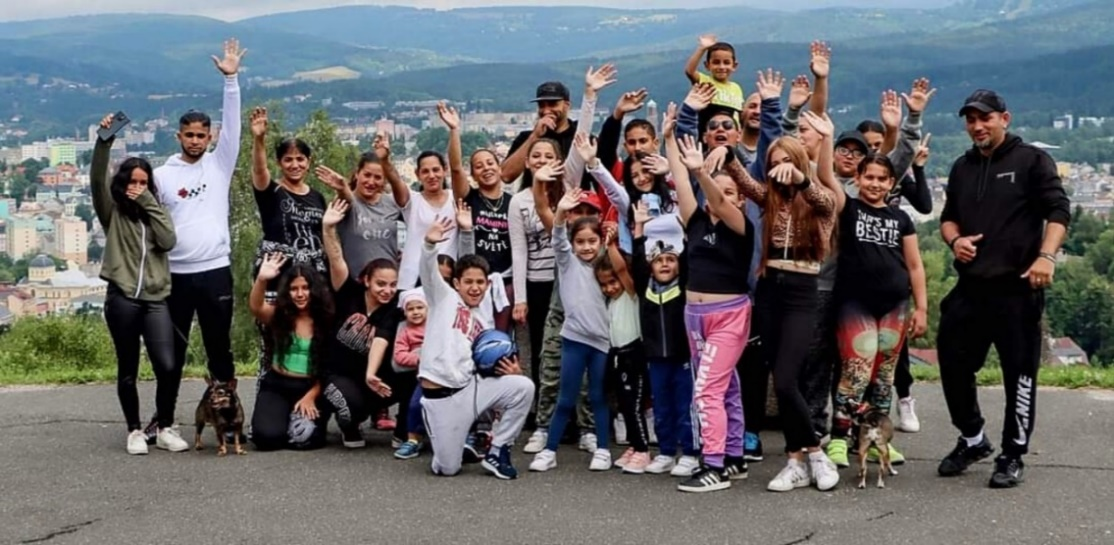
Altogether, 75 residents were involved in organizing community activities in the 2022 projects. Another 500 people took parts in events or activities. Reflecting afterwards, the project organizers noted that they had improved their organizational and communication skills, and that local informal leadership structures had emerged. One particularly inspiring project was called Father’s Day and Romani Cooks (Brno), which promoted intergenerational collaboration and gender equality.
Alongside these successes, there were also challenges – for instance, the project teams’ limited capacity and difficulties in communicating with the majority, non-Roma population. Nevertheless, the micro-grants proved to be an effective tool for the first phase of community work, which should build trust, participation and a basis for long-term development.
FROM COMMUNITY ACTIVITIES TO ORGANIZATIONAL STRUCTURES: BUILDING RESPONSIBILITY IN COMMUNITIES IN 2023
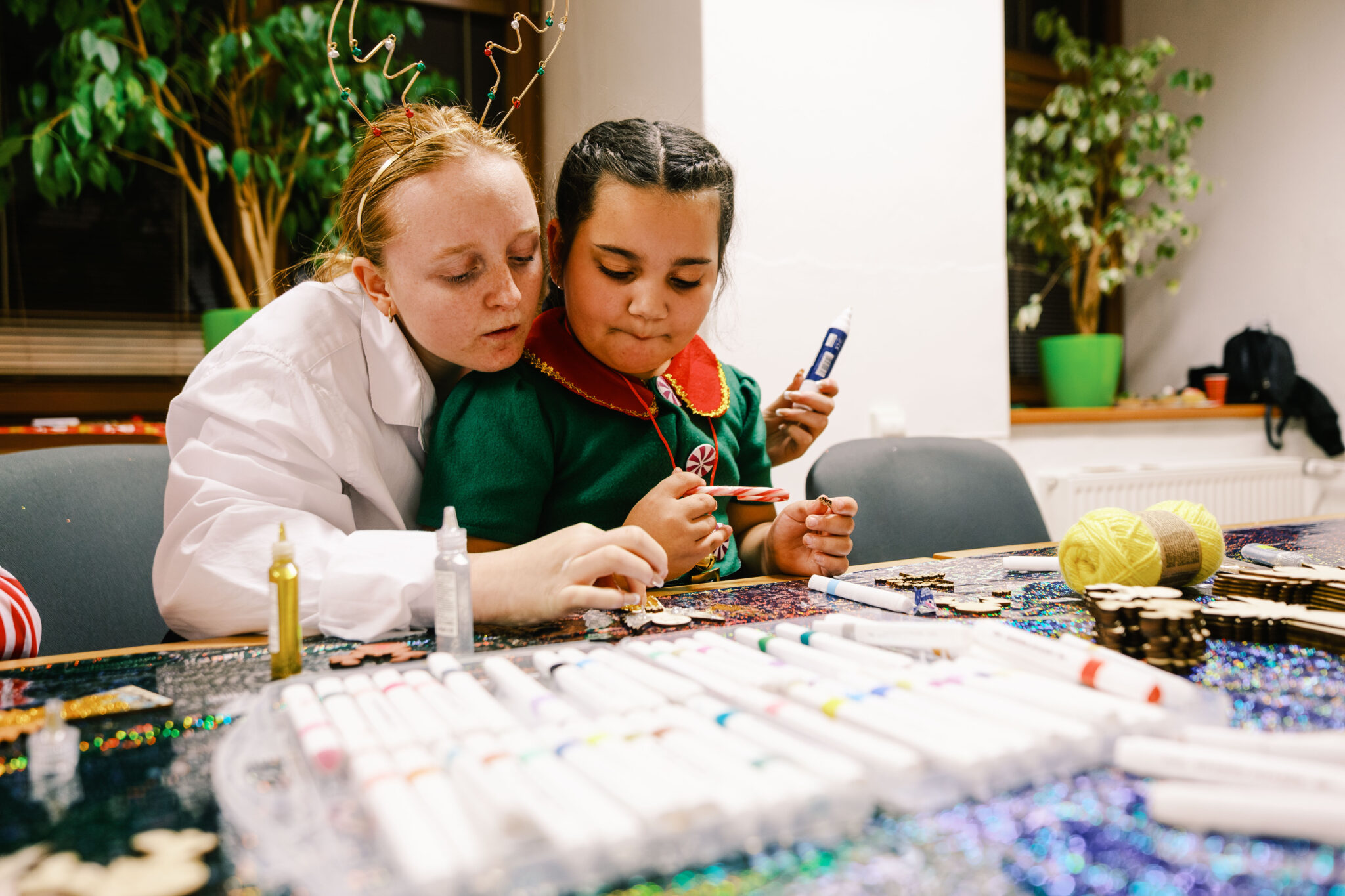
For many of the initiatives supported by Via Foundation, 2023 saw a transition from initial activities to the building of more stable community-based organizational structures. Owing to the experience they had gained the prior year, project teams were able to grow, develop working groups and take on more responsibility for the planning and implementation of community activities.
Projects such as Festival Amaro džives in Frýdlant, Roma Day in Volary and summer camps in Brno, Třinec and Táboř demonstrated the benefits of ABCD. Micro-grants enabled the engagement of new team members and collaboration with institutions, as well as the development of a safe environment for exchange of experience and growth of residents’ and community leaders’ capabilities.
There were also challenges: e.g., teams’ limited capacity and insufficient support from local government. Regardless, this project phase showed that if the conditions for growth are created – a support system, funding, community involvement in decision-making – Roma leaders can become full-fledged partners to local government.
TOWARDS INDEPENDENCE: COMMUNITY LEADERS AS AGENTS OF CHANGE IN 2024
In 2024, the community initiatives supported by Via Foundation showed an essential shift. The communities entered a third phase of development, characterised by a stabilisation of community-based organisational structures, more open decision-making and independent management of more complex projects. Key aspects were deeper collaboration with institutions and active negotiations about the community’s future.
Projects such as Growing into Beauty (Brno) and Have Your Own Dream (Pardubice) demonstrated that activated communities are capable of not only implementing events, but also influencing community affairs. In these cases, micro-grants served as a source of financial support and a tool to strengthen community leaders’ capabilities and responsibility.
Experience confirmed that in places where participatory structures have been developed and support focuses on strategic planning and facilitation, true emancipation occurred. An ongoing challenge remains stable funding and ensuring long-term sustainability. Nonetheless, these initiatives demonstrate that Roma leaders are becoming partners to local government and agents of positive change.
SIGNIFICANCE OF COMMUNITY PROJECTS FOR COMMUNITY DEVELOPMENT
In 2022-2024, Via Foundation’s micro-grants played a significant role in strengthening the organisational capacities of Roma communities, growing leaders’ capabilities and developing collaborative ties with public institutions. The program confirmed that even small financial support to the grassroots can be a catalyst for transforming passive groups into active agents of change.
Three phases of development were seen in the projects: from building trust and engaging the community (2022), to growth of organisational structures and responsibility (2023), all the way to independent management of projects, regional collaboration and exchange of experience (2024). The importance of supporting existing community resources through an ABCD approach was demonstrated on this journey.
Key factors in project success were strong leadership, inclusive planning and active engagement of residents. Ongoing challenges are involving the majority population, securing stable funding sources and sustaining long-term motivation. Experience shows that community micro-grants can be an effective public policy tool in social inclusion and support of citizen engagement in socio-spatially excluded localities.
Michal Kandler, Ph.D. candidate, Faculty of Social Studies, Ostrava University