Pavel Rek has been mayor of Ratenice, a town in Central Bohemia, for over three years. It wasn’t political ambition that brought him to town hall. He has been an active resident in his town for many years through his charitable and educational association, which has received support from Via Foundation. Because of his community involvement, some of the town’s residents asked him to run for local office. “In our view, it’s people like Pavel who are dedicated to their communities who belong on municipal councils. We help them prepare for this role,” explained Ludmila Zájedová of Via Foundation. Via’s “Taking the Fear Out of Local Politics” program offers tailored mentoring with experienced politicians as well as seminars on municipal themes. Jitka Ottová was a program participant from the from Dolany in the Hradec Králové Region who chose mayor Pavel Rek as her mentor. The interview below, with both of these trailblazers, captures how they serve their communities.
Jitka Ottová (“O” below), a community organizer from Dolany in the Hradec Králové Region, and Pavel Rek (“R” below), a former community organizer who is now also the mayor of Ratenice in the Central Bohemian Region, spoke with Anna Slaninová.
Let’s start with a direct question. Are you afraid of local politics?
O: Yes, actually. In my job as a water resources manager, I meet various mayors and see that their job is nowhere near as simple as it looks from the outside.
R: Before I became mayor, I had no experience in local politics, so I was apprehensive. But those fears gradually faded. Naturally, there were some blunders along the way as I was learning, but we tried to learn from them. You simply do your job as well as you can.
Mr. Rek, what advice would you give to people like Jitka Ottová to ease their fear of local politics?
R: The best way to overcome fear is with information. Jitka Ottová did the best she could: she signed up for Via Foundation’s program, which can help her overcome her fear.
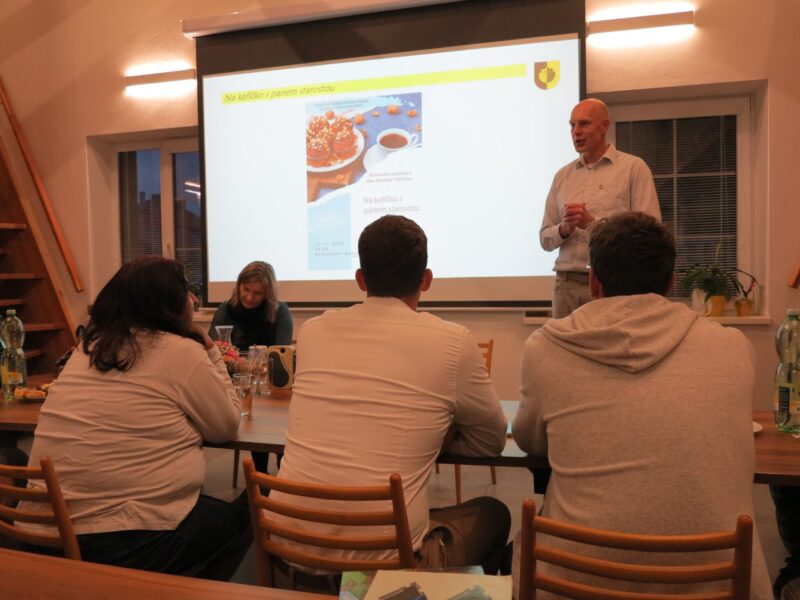
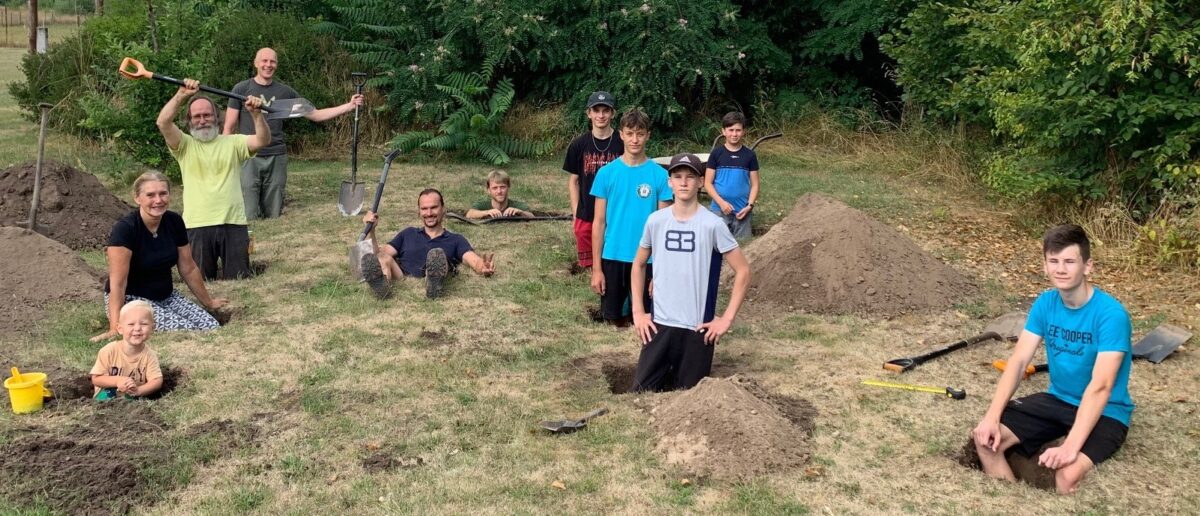
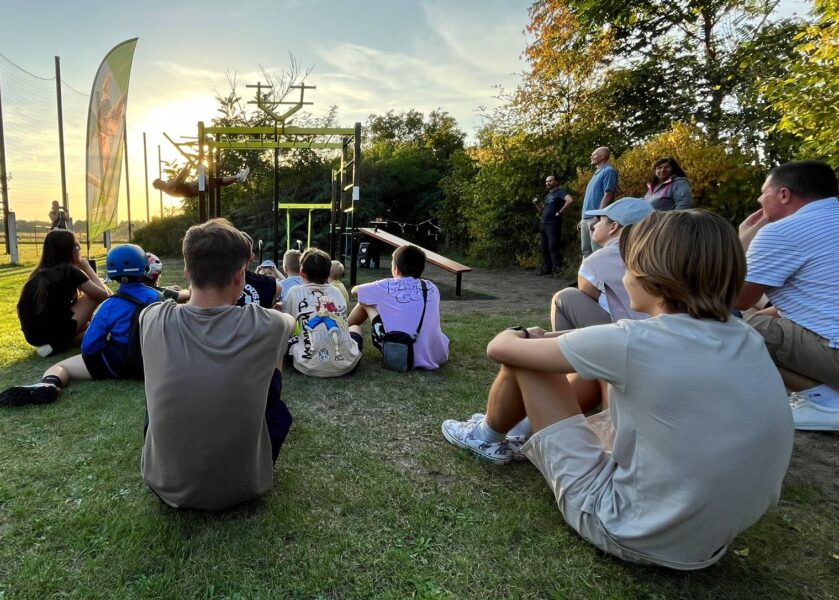
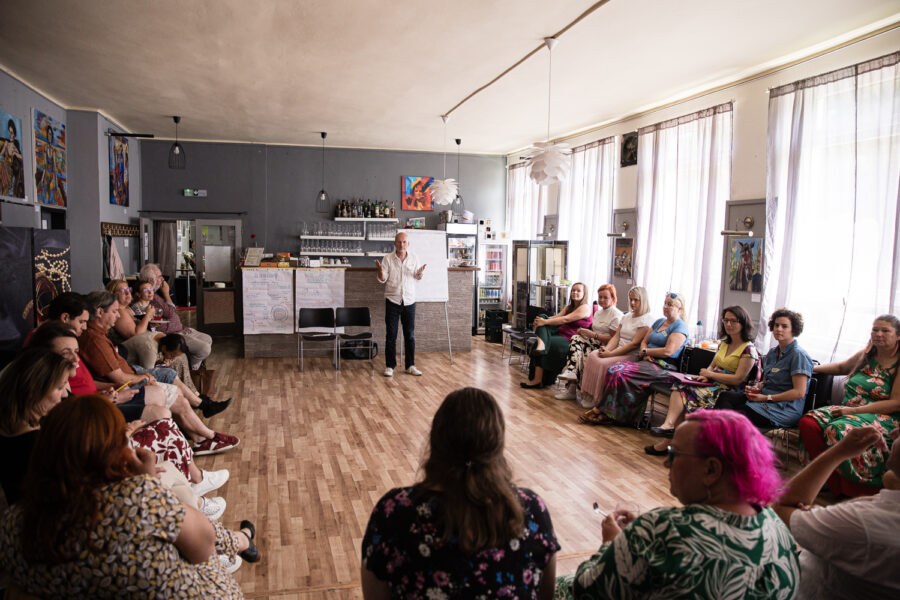
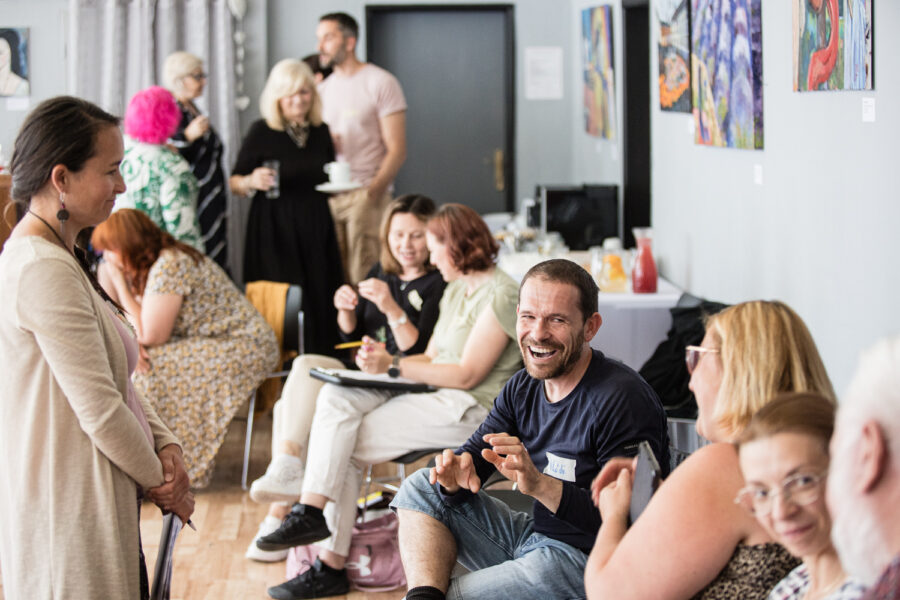
RATENICE: The annual event “Coffee with the Mayor” is popular among residents and many problems are resolved during these informal gatherings. The middle photo shows local athletes and council members making preparations to install outdoor workout equipment. The official opening of the outdoor gym (right photo) was accompanied by a professional, inspiring show.
How did each of you get engaged in local politics?
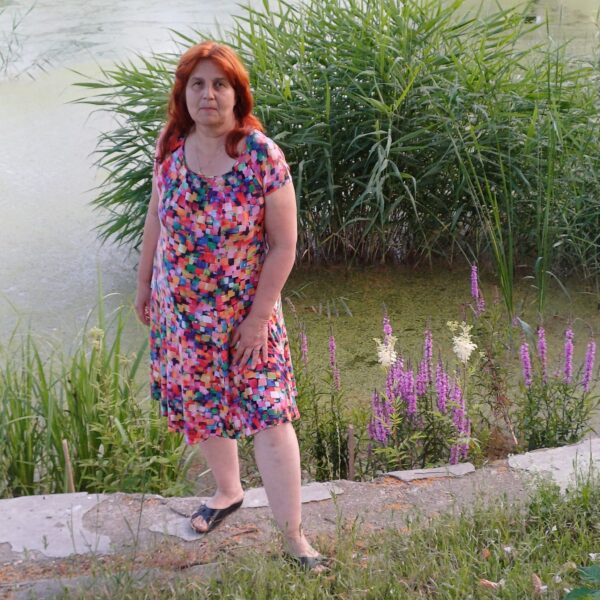
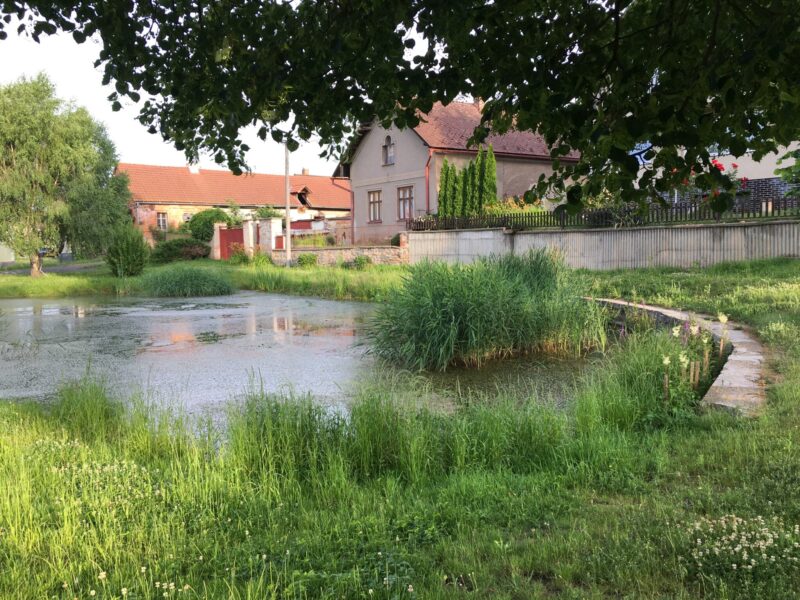
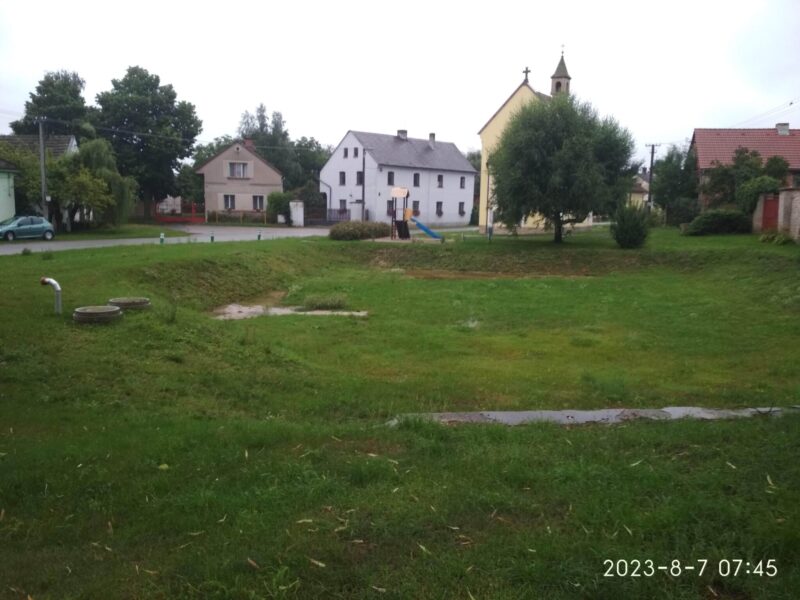
O: Five years ago, I wasn’t interested in local politics. I thought that everything in Dolany was just fine. But in 2020, something happened that changed everything. The town decided to fill in the pond in the village square. The residents of Dolany, including me, didn’t like that because we had childhood memories of the pond. It was a prominent landmark and suddenly it was being filled with rubble. When we started protesting, the town leadership told us that if we had attended the town council meetings, we would have known about it. So I started attending the town council meetings. There I discovered that the village leadership was not nearly as competent as I’d thought, and I began to consider running for office myself. Other protesters and I founded the Letokvět association and we managed to save the pond. It brought us together, and now we’re trying to bring about change in the village.
R: My journey was very similar. Twenty years ago in Ratenice, we founded the “Ratenická včela” association to bring culture, education, and community improvement to the town. People noticed that we were doing things for the village in our free time and that we were helping Ratenice grow. As the 2022 municipal elections approached, some dissatisfied council members at the time came to me. They were looking for someone willing to serve as mayor, and in a moment of youthful recklessness, I agreed. Without even trying particularly hard, we got elected and I actually became mayor.
Why did you decide to apply for Via’s “Taking the Fear Out of Local Politics” program?
O: It was a coincidence, but it came at just the right time. I hadn’t heard of Via Foundation before; I just happened to come across the offer online. Since I already knew I wanted to run in the next local elections and there was still time to prepare, I wanted to take advantage of it.
R: Via Foundation reached out to me. I was reluctant at first, arguing that there were surely much more amazing mayors with more experience who had more to share. But the program organizers persuaded me by saying they needed someone who had recently started out and gone through a rough beginning. I remembered how I was handed a set of keys and didn’t know which one went where. I told myself that I could actually help someone with advice on getting through those tough early days.
Mr. Rek, you’re Jitka Ottová’s mentor in the “Taking the Fear Out of Local Politics” program; what kind of student is she?
R: Amazing. It turns out that mentoring has been very beneficial for me, too. Jitka Ottová isn’t afraid to ask questions. When she has an idea, she puts it out there; when she has a question, she asks it. This means that the mentoring sessions generate great ideas that I can reflect on in the future. I appreciate Jitka Ottová for the fact that we can also discuss things that didn’t go well, things you don’t usually brag about to people. We also get along well on a personal level. When we met face-to-face, it was a very pleasant encounter.
Ms. Ottová, I have a similar question for you: what kind of mentor is Pavel Rek?
O: Via Foundation made the right choice when they matched Pavel Rek with me. We have similar personalities and we share common interests. We’re even both into beekeeping! Our towns are also similar, about the same size and face similar challenges. And as a mentor, Pavel Rek is great because he’s willing to explain anything that interests me. I appreciate that he openly shares his challenges with me. He doesn’t sugarcoat anything. I’ve received a lot of valuable advice from him.
How did you approach the mentoring?
O: Quite systematically. First, I attended a town council meeting and had the chance to compare how things are done here and in Ratenice. And there was quite a difference! I liked how transparent the Ratenice council members are in managing the municipality. Mayor Pavel Rek began by summarizing what he had been working on since the last council meeting and what the technical services department had been doing. Here in Dolany, we don’t even know how many employees the technical services department has, let alone what they do. I also appreciated that the council meeting took place in a friendly, relaxed atmosphere. In our town, we only deal with accumulated problems and emotions. And then we took a tour of Ratenice. I saw how the local clubs operate and what goes on behind the scenes. It was very inspiring.
R: I thought it would be great for Jitka Ottová to see our town and the council meeting in person, as it would give her better insight into the topics we’ll be discussing. It gave me a lot, too: I learned from Jitka how things are done in her town. Of course, I get information from neighboring mayors, but I hadn’t been to their town council meeting, so it was an interesting insight for me. Mentoring is a two-way street.
What do you consider your greatest mission, and when will you consider it a success?
O: My greatest mission right now is to get elected to the municipal council. Once I’m there, I’ll work to get the municipality to start doing things differently, especially when it comes to the environment. The municipality is paving roads and mowing the grass too short. There’s simply a lack of basic awareness about environmental protection. As a council member, I’d also like to be more transparent and not divide people in the town.
R: I want the people of Ratenice to say, after these four years that I’ve served as mayor, that we’ve done something meaningful for the town. We don’t have the ambition to win the next election at any cost. We want our neighbors to see that we’ve tried our best and have developed principles in the village that we ourselves believe in. For example, we commissioned a conceptual study of the village square and a study of the parish courtyard, two examples of how we’d like the village to look. We’re not taking the path of the cheapest asphalt or a standardized fire station; instead, after discussions with residents, we’re delivering valuable spatial solutions and blue-green infrastructure. We believe that these projects wouldn’t have come to fruition without us and that the community will appreciate them because it played a part in their development.
What are your plans in your communities?
O: Here in Dolany, we’ve just held our very first participatory planning session. It focused on the village square with the pond, the very place where it all began. Architects drafted a site plan, but people were able to share their vision for the space. The result looks great, and you can check it out at https://dolany-na.cityupgrade.cz/. I was lucky that participatory planning was one of the topics covered in Via’s program, so we were prepared and were able to discuss the proposals much faster. When I saw what Ratenice looks like, I realized that there’s still a lot of room for improvement here.
R: I believe that here in Ratenice, our advantage is that over the past four years we’ve put things in motion and whoever takes over after us will be able to keep the ball rolling for several decades. We’ve managed to make significant progress on comprehensive land consolidation for the village, so our landscape has a chance to improve both for people as well as for wildlife, water management, and agriculture, and to become more stable overall.
What do you think is the biggest challenge of working in local politics?
R: The biggest challenge is people. Everyone sees issues through their own eyes, but as mayor, I have to distinguish between what the community needs and what a single citizen needs. I used to work as an engineer and of course, I collaborated with people then too but communication with them followed a clear path: it had a beginning, a middle, and an end. Local politics, however, has neither a clear beginning, nor a clear path, nor a clear end. Most problems extend beyond a single term of office; the challenges are more complex in many respects, and you have very limited resources to address them.
O: I feel the same way. As a water resources manager, I interact with people a different perspective. It’s clear to me that as mayor, I’d have a much harder time. Plus, I’m not an extrovert, so local politics will be a step outside my comfort zone as well.
Ms. Ottova, what did the “Taking the Fear Out of Local Politics” program give you?
O: It gave me more courage. I’m more confident because I have more knowledge and a better grasp of the issues. And here’s something else I’d like to highlight: Via Foundation supported us in the idea that it’s good to transform a protest vote into a constructive one. That made me realize that we were doing things right here in Dolany, because we didn’t just stop at raising a protest voice. We formed an association that wants to do good things that will leave a lasting impact. It’s a great stepping stone to becoming a local council member.
Mr. Rek, you didn’t go through the program yourself, but you’ve received several grants from the Via Foundation in the past. Did they help you on your path toward local politics?
R: Definitely. As part of the Ratenická včela association, we applied for support from Via Foundation many times and often received it – both funding and advice. Via was always our first choice. Thanks in part to Via, we’ve built a reputation in the town as an association that brings money into the community, rather than taking it out. People began to take notice of our activities, and then, when it came time to decide who to vote for in the elections, they cast their ballots for our association of independent candidates, certainly in part because they saw what kind of people we are and what we stand for. It was a way to get involved in local politics, even though that wasn’t the intention at all in the beginning.